The fire is low. Hold until dawn.
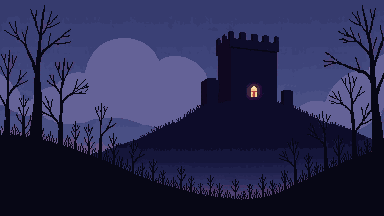
FTL’s crew triage, rebuilt as a castle under siege. You are the Warden of Solnitsa, a salt-mine keep, on the Night the fire is low. The castle is drawn in cross-section — wall, gate, hearth, well, granary, bell tower, chapel, undercroft, all of it visible at once — and you have four defenders and never enough of them. The besieging Host is bound by the same folklore law that binds you: nothing crosses a threshold uninvited, nothing takes what is not owed, a name given freely is a claim. They do not storm you. They grind you until you break the law first, and the Tally is the bill for every time you do. Twelve Watches to dawn.
Free in the browser · No account · No ads · A night runs about 15 minutes · Landscape
The Night
Everything is a body in a room
No ability bars, no cooldowns, no unit that acts without standing somewhere. You give an order and a defender walks to it — and the walking is the cost. Four of them, eight rooms, and a fire that has to be fed while they are busy being somewhere else.
The Tally is a bill, not a timer
It does not tick down on its own. Every increment is something you did — a threshold crossed, a debt left standing, a name given away — which means it can be argued with, paid down, and frozen. The Host is not stronger than you. It is more patient, and it is keeping accounts.
One purse, three hungers
Chime is the only currency, and the wards, the fire and the people all want it. Every night is the same question asked twelve times in a row: what do you let go cold so that something else stays lit?
Built like a clock
The simulation is a fixed 10 Hz integer tick with a seeded generator and no floating-point drift anywhere in it. The same seed produces the same night on every machine on Earth, which is why the obituary card at the end of a run carries its seed: it is a shareable, replayable record of exactly how you lost.
No account, no ads, no third-party analytics, no tracking. The night runs entirely on your device; anonymous gameplay statistics are the only thing that ever leaves it, and the names you give your defenders are not among them — they are not even written to the save file. The privacy policy lists every field the game can send, in a table.
Specs
- Platform
- Browser — desktop, phone, tablet · iOS in TestFlight beta
- Price
- Free in the browser
- Genre
- Castle-siege roguelike · single-player
- Session
- One Night ≈ 15 minutes · pause whenever you like
- Orientation
- Landscape only — the castle is a cross-section
- Connectivity
- Online only to load; the night itself runs offline
- Saves
- On-device only — no cloud save, no account
- Telemetry
- Anonymous gameplay statistics · no PII, no tracking, opt-out with ?metrics=0
AI-content disclosure
Salt Crown’s pixel art is generated with Pixellab (AI image generation) against a hand-built style specification, then curated, quality-gated, and integrated by the development team. All game design, systems programming, writing (37 event cards, all in-game prose), and balancing are original work by Arkynate. No AI-generated content is presented as hand-drawn art. Player data: anonymous gameplay metrics only — no accounts, no PII, and player-typed content is never transmitted.
They do not storm you. They grind you until you break the law first. Keep the fire.